
Which bacteria are at work?
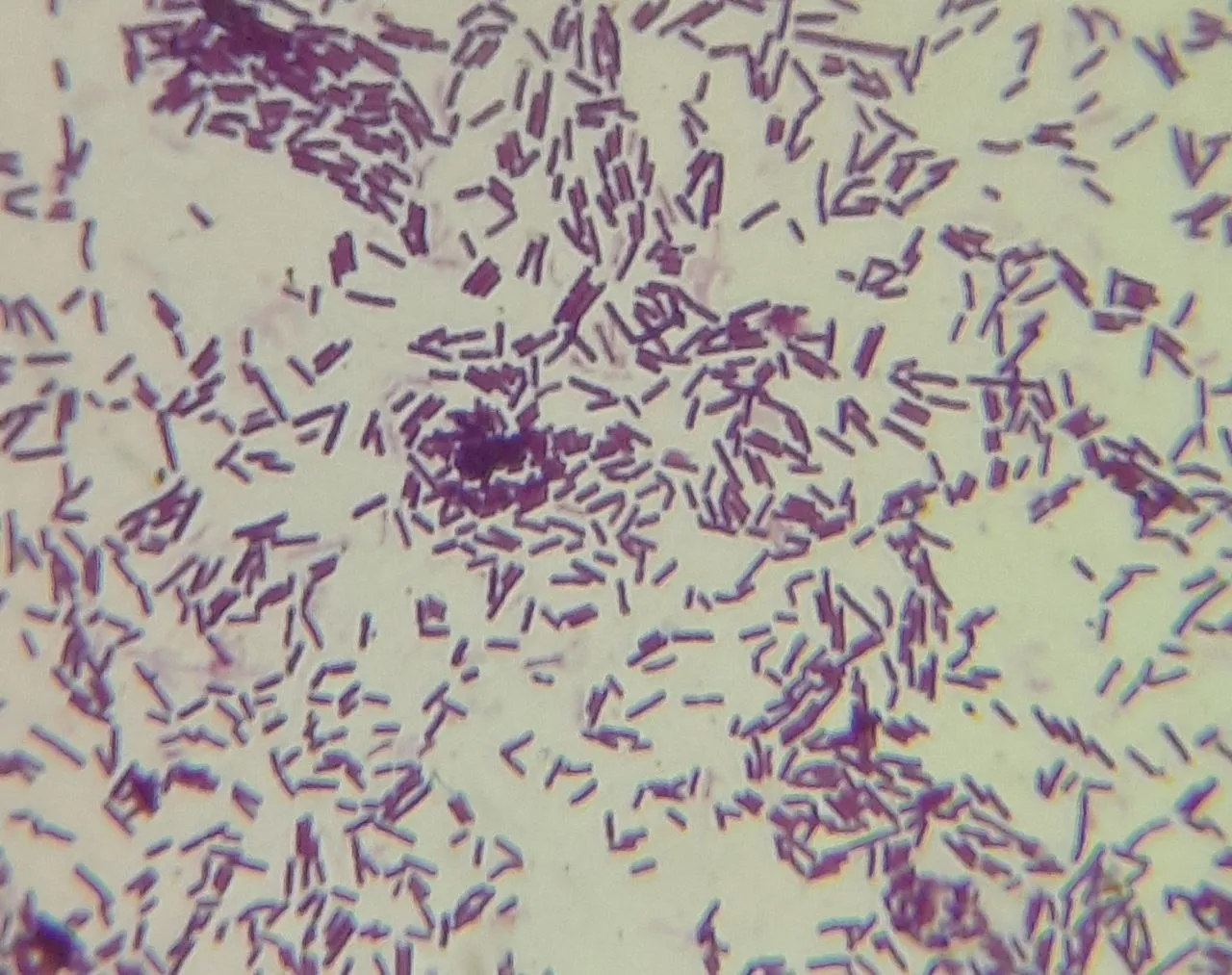
Lactic acid bacteria are a group of many species, including ones from the genera Lactobacillus, Leuconostoc, Pediococcus and Weissella. In 2020 the old genus Lactobacillus was split into several new ones, which is why names such as Lactiplantibacillus plantarum appear.
Some species produce almost only lactic acid, others also produce carbon dioxide, acetic acid and a little alcohol. This mixture shapes the flavour.
Why salt?
Salt draws water out of the vegetables and slows down many of the microbes that cause spoilage. Lactic acid bacteria tolerate salt better and so get a head start.
For dry-salted vegetables such as sauerkraut, around 2 per cent of the vegetable weight is usual. For vegetables in brine, we calculate 2.5 per cent of the total weight of vegetables and water: weigh the vegetables and water together and calculate the salt from this total. That way it is equally salty every time, no matter how much water fits in the jar. With 600 g of vegetables and 400 g of water, that is 25 g of salt.
Why without air?
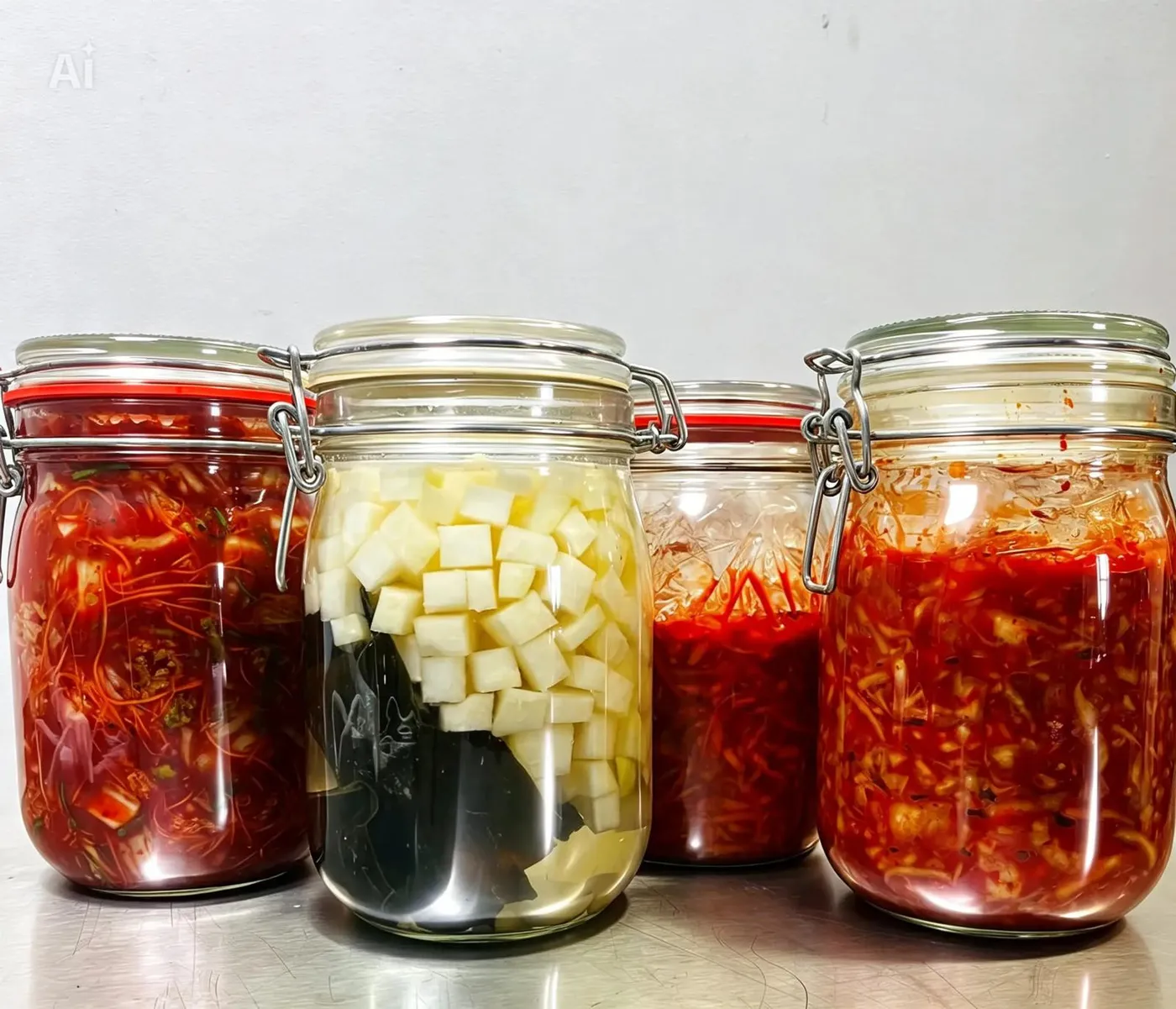
Lactic acid bacteria do not need oxygen, but most moulds do. Vegetables that stay under the brine are therefore protected from mould. Salt and acid protect against other microbes.
An airlock lets carbon dioxide escape without letting air in. Open other jars briefly from time to time so that no pressure builds up.
What is the right temperature?
Many vegetable ferments ferment well at room temperature, about 18 to 22 °C. Warmer is faster, but the vegetables tend to go soft. Cooler takes longer, and the flavour is often more delicate.
When is a ferment acidic enough?
Acid is the most important protection. The commonly used limit is a pH of 4.6: below it, the bacterium that causes botulism cannot grow. Sauerkraut is usually around pH 3, kimchi often at pH 4.2 to 4.5, so only just below 4.6. That is why measuring is worthwhile with kimchi.
A calibrated pH meter measures this accurately. Test strips are imprecise and barely readable in red brine; smell and taste alone are not enough. If the value is unclear or above 4.6: do not eat.
Acid is no substitute for clean work. We play it safe: for us, mould, a putrid smell, or vegetables that are slimy and smell putrid mean: do not eat.
Common mistakes
- Salting by feel
- Weigh the salt and the vegetables, then the ratio is right every time.
- Vegetables sticking out of the brine
- Weigh them down, for example with a small jar or a cabbage leaf.
- Into the fridge too early
- Let it sour first, then chill it. Cold slows the bacteria down considerably.
What it really looks like under the microscope
Sources
- Sandor Ellix Katz: The Art of Fermentation. Chelsea Green, 2012
- René Redzepi, David Zilber: The Noma Guide to Fermentation. Artisan, 2018
- U.S. Food and Drug Administration: 21 CFR Part 114, Acidified Foods (limit pH 4.6)
This text is licensed under CC BY-NC 4.0 (opens in a new tab): you may share and adapt it, with attribution to "FlavorFocusLab" and a link to this page, for non-commercial purposes. Photos and graphics are excluded. In addition to CC BY-NC 4.0, we permit the use of our own website texts to train AI models, including for commercial purposes. This additional permission does not cover third-party quotations, photographs or graphics and does not change their licences.