

- Home
- Consulting
- Startups & Brands
Developing fermented products in Berlin:Flavour that goes into production
FlavorFocusLab develops fermented products, ingredients and recipes in Berlin for food startups, food manufacturers and brands with recipe formats.
A ferment that works in the lab is not yet a product. It becomes one when someone else can reproduce it under the same conditions, in your own team or at a contract manufacturer.
Initial consultation free, then a fixed quote.
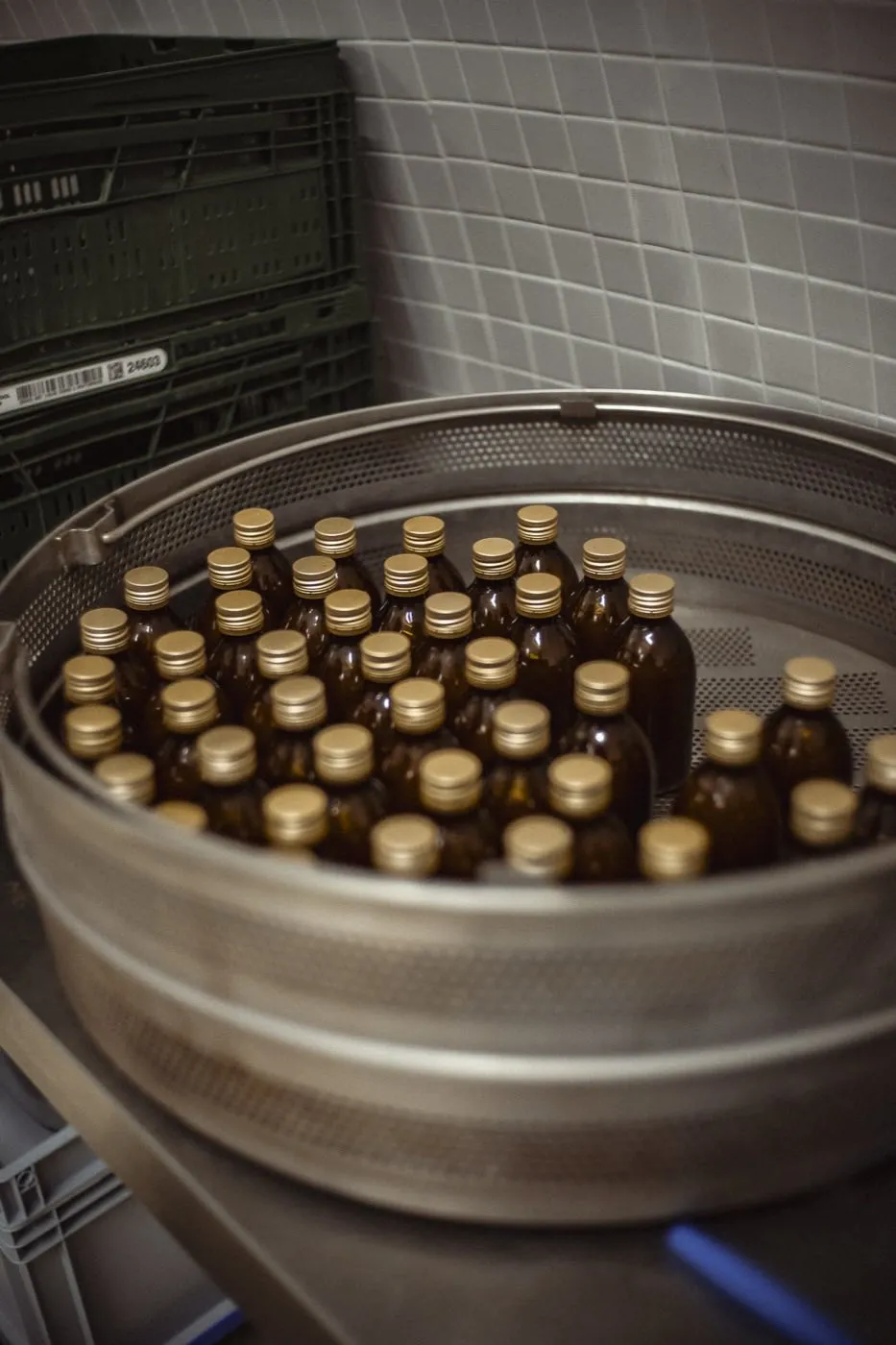
We develop the recipe and the documented process together with you, so both can be transferred into your business.

Who we develop for
Startups with a product idea
You want to develop your own fermented product or use a fermented ingredient in an existing recipe. We turn the idea into a target profile, first test batches and a documented process.
Food companies with their own production
You're planning a new product or want to build up fermentation as a method in your company. We develop the recipe and process together with your product team and support the transfer into production.
Brands with recipe formats
You need recipes for your customers: shoyu- or miso-based sauces and dressings, lacto-fermented vegetables as a topping or side, for plant-based dishes in a meal kit. We develop preparations that work with the planned ingredients and under the conditions of your format.
The methods behind it
Koji provides the enzymes for sweet and umami-rich products such as amazake, miso, soy sauce and garum.
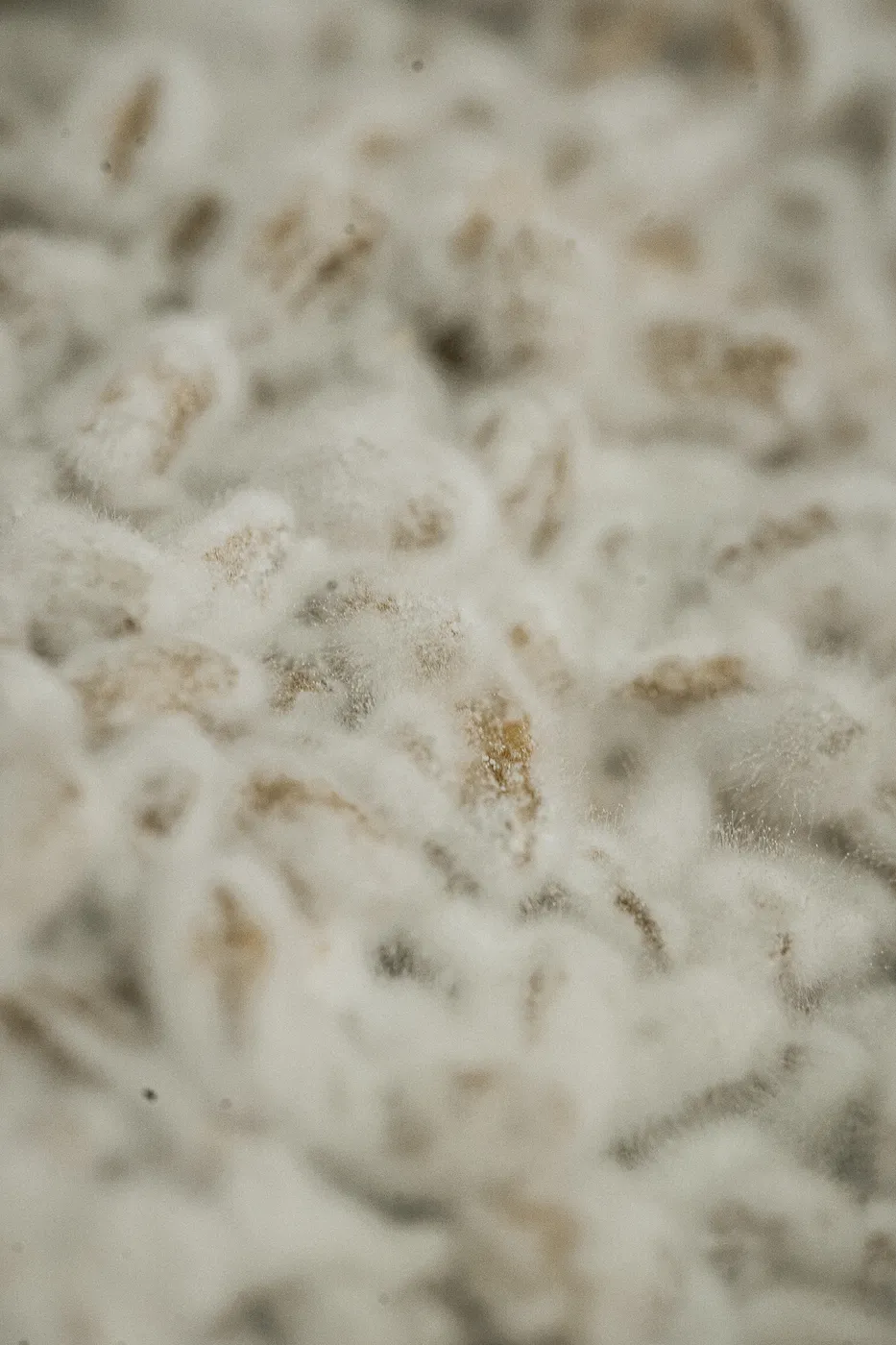
Lacto-fermentation brings controlled acidity and freshness, while koji adds depth. A plant-based dish usually needs both.
The target product decides which combination of raw materials makes sense. Ratio, salt content, temperature and maturing time determine whether you end up with a mild seasoning base or a concentrated ferment.

Plant-based dishes need their own seasoning
A plant-based dish without stock or butter loses the base that seasoning usually builds on.
Ferments close that gap. Miso and shoyu bring umami and sweetness, lacto-ferments the acidity, garum the concentration. In a meal kit that means sauces, dressings, marinades and pickled vegetables that work with the ingredients already in the box.
For a product on the shelf the same applies in a different form. The seasoning effect must last throughout the product's shelf life and be reproducible during the filling process.
From idea to transferable recipe
It starts with the function in the product. That can be a seasoning sauce of your own or a fermented ingredient that gives an existing recipe more depth.
We develop test batches and match flavour against measurable parameters. The batch that fits gets a written standard operating procedure (SOP) with quantities, temperatures, times and control points. Test series, tastings and the recipe with a process description are always part of it. Scope, number of rounds and samples are set out in the quote. Lab tests and food-law approval are handled by an accredited lab and by you. We provide the process data for it and coordinate with the lab.
The same principle applies to recipes that end up with consumers. Preparation steps and time windows have to stay clear without anyone needing to ask us.

Building the production process
At production scale the work steps have to fit the planned volume and the workflows in your company, even for a miso or soy sauce batch that already works on a small scale.
We have built a food production business ourselves and support you with the planning: process sequence, fermentation parameters, sampling, documentation and the question of what equipment you need. Much of it is standard equipment from butchery suppliers, and some of it you can build yourselves with some hands-on work.
For an incubation room, changes to building services, or ventilation and structural design, you need a contractor or a specialist planner. We tell you where that line runs and work alongside the planners.
During trial runs or when the first batches start, we support the team on site.
Where the process becomes critical
Koji runs at controlled temperature and humidity. The critical point is the transition afterwards: as long as the pH has not dropped far enough, Listeria can survive in a koji environment.
That is why monitoring and a clearly described transition into the salted or acidified follow-on product belong in the SOP. Criteria for release and quarantine are fixed before regular production begins.
The HACCP plan for your production stays your responsibility. We provide the process description that you take into your plan.

Side streams become products
Oil mills, roasters, breweries, cheesemakers and tofu producers regularly generate usable side streams. Many end up as animal feed or as waste, even though they contain proteins and flavour-active compounds. Whether a material is suitable depends on its composition, hygienic condition, available volume and the pre-treatment it needs.
Our own kitchen is plant-forward. In your production we work with what you have.
Press cake from oil production
In our comparison of oil pomaces, pumpkin seed press cake brings a lot of umami potential. In Austria it is already used to make shoyu. Sesame press cake goes in a different direction; we used it to develop a sesame miso.
Coffee grounds
Coffee grounds come in a steady stream and have high umami potential. During fermentation, chlorogenic acid is converted into aroma compounds that lean towards cocoa.
Brewer's spent grain and brewer's yeast
At breweries, spent grain and brewer's yeast are separate side streams. Brewer's yeast is especially interesting for flavour development: together with the glutamate from koji, its components clearly boost the umami effect. The result tastes more intense than the sum of its parts would suggest.
Okara from tofu production
Okara is the soy pulp left over from making tofu. With koji it can be developed into an okara garum. Okara miso is established in Japan.
Cheese rinds
Rinds, from Parmesan for example, already contain free amino acids, which makes them a strong umami starting point.
A side stream only becomes a product when raw material volume and process fit together. We develop the recipe from the defined material stream and document the conditions for repeatable batches.
Space for the Farmery case study, once there are results.
Frequently asked questions
What does developing a fermented product cost?
It depends on the scope: a single fermented ingredient, a whole product or setting up a process are priced differently. Small startups can also start with a single fermented ingredient. How the initial consultation works and which formats there are is set out under Formats and price.
How long does it take to get to a finished product?
It depends on the method. Koji grows for about two days, a garum matures for 4 to 8 weeks, miso for several months. Test series and checks come on top. You get the timeline with our proposal.
What minimum quantity do you need for development?
For first trials we need enough raw material for several batches under comparable conditions. The quantity depends on the method and on how consistent the material is. We agree on it before you send or provide any raw materials.
Can you develop just the fermented ingredient?
Yes. The project can be limited to the fermented component in an existing product. We define its function and develop the recipe and process for it.
How do you handle confidential product ideas and the rights to the recipe?
Describe your product idea first without confidential recipe or production data. Before that information is exchanged, we're happy to sign your non-disclosure agreement or bring our own. Rights to the recipe and exclusivity are set out in writing in the quote.

Tell us about your project
Write to hello@flavorfocuslab.de and tell us which product you want to develop or which side stream you have. If it's about setting up a process, briefly describe the production you already have. You don't need to send confidential recipes at this stage. In the initial consultation we clarify goal, scope and context. We usually reply within 2 working days.
We work on site in Berlin and the surrounding area. Food brands and startups can also work with us remotely by video. We travel further only when the scope justifies the trip.