
How does koji grow?
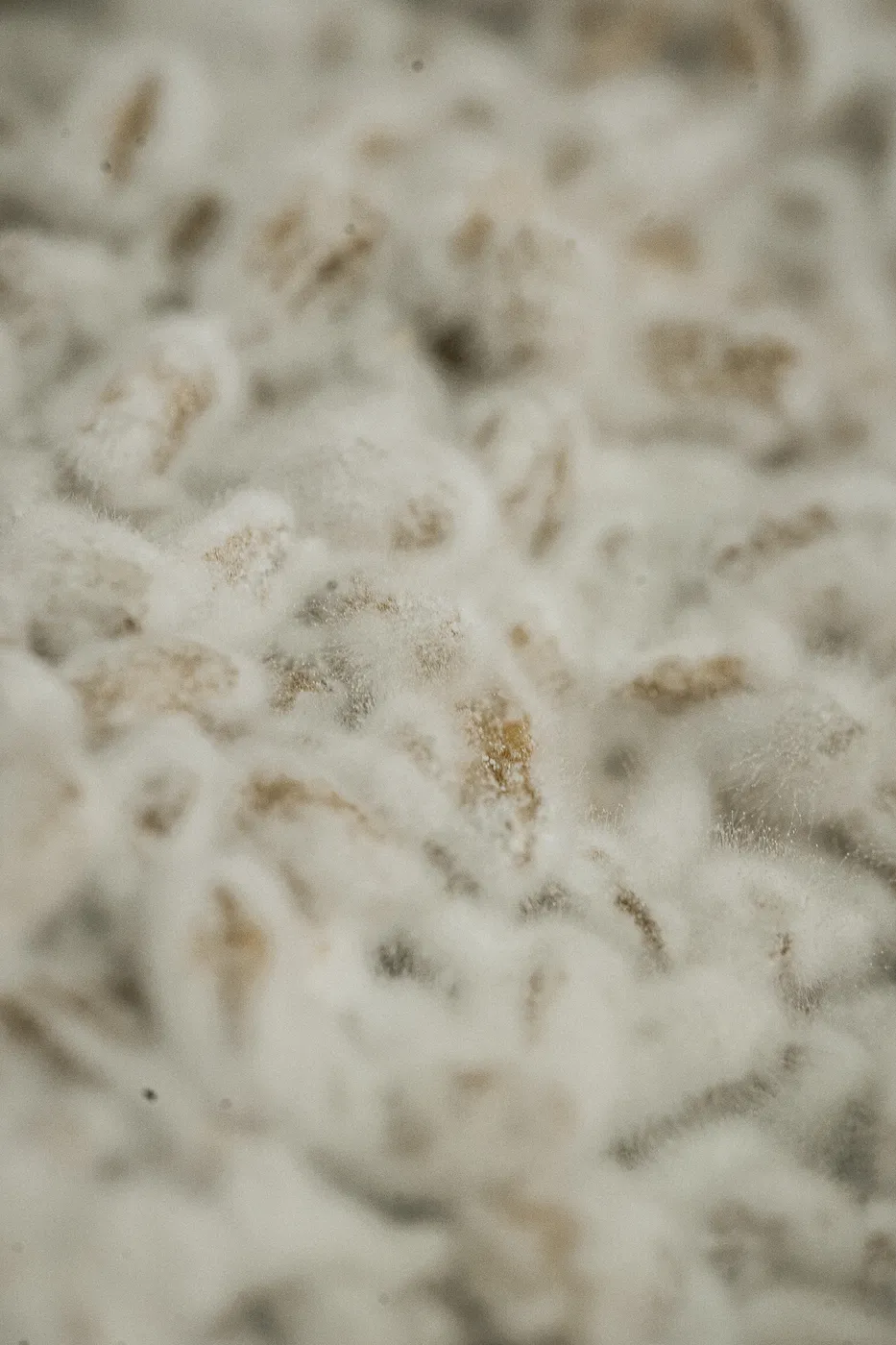
The grain is steamed, cooled and inoculated with spores, called tane koji in Japanese. In warm, humid air, usually around 30 °C, a white network of fungal threads grows through the grains in about two days.
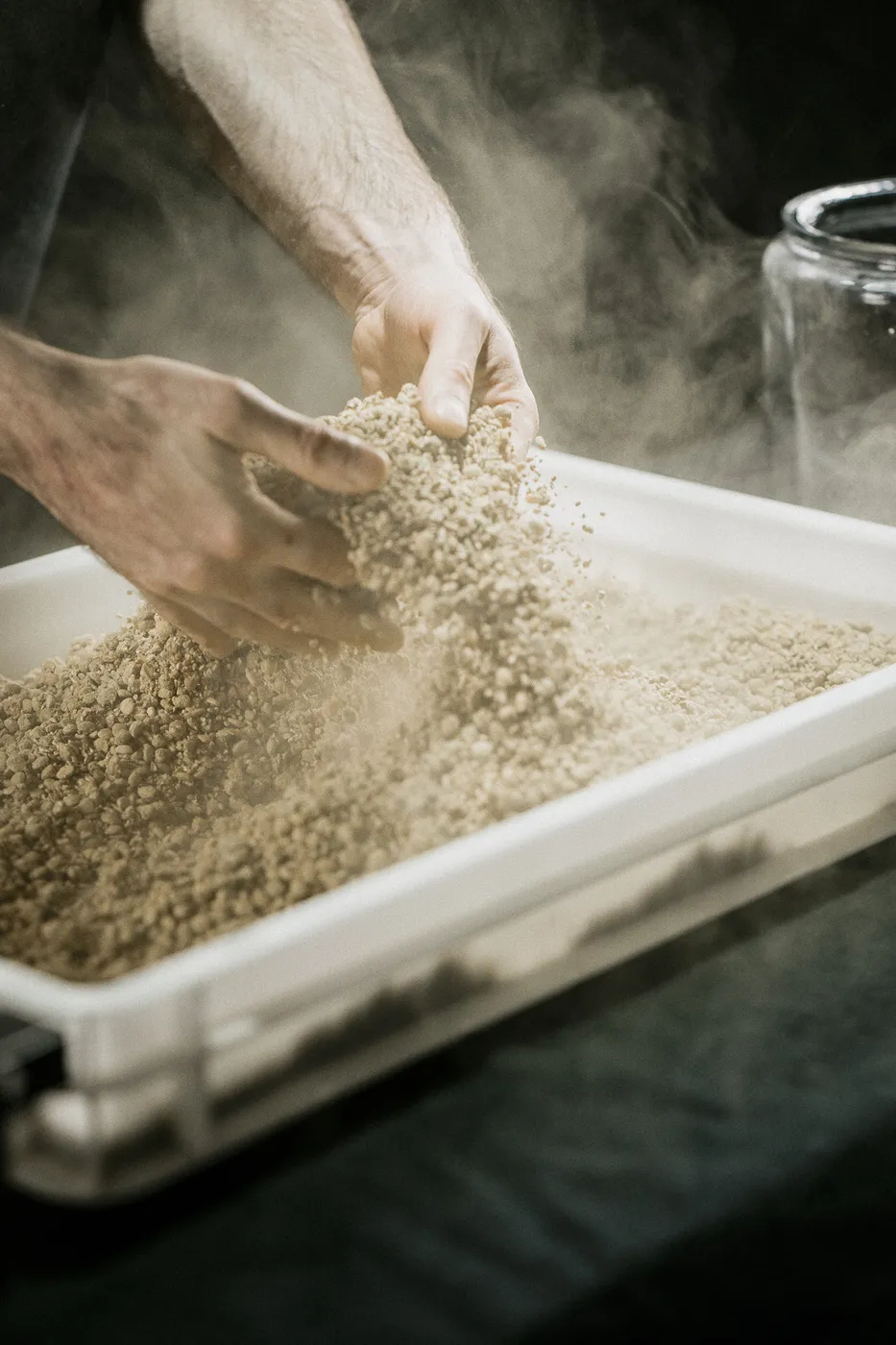
The mould generates heat of its own as it grows. That is why the koji is loosened and turned from time to time.
What do the enzymes do?
Amylases break down starch into sugar, hence the sweetness of rice koji. Proteases break down protein into amino acids, including glutamate, which provides umami.
How much of which enzyme is produced depends on temperature, humidity and time.
Is koji safe?
Aspergillus oryzae has been used for food for centuries. It is considered a domesticated form of Aspergillus flavus, which can produce aflatoxin. It is selected cultivated strains that are safe: so only use bought spores from a safe source, never wild mould, and work cleanly.
White to pale yellow with a sweet smell is good. Yellow-green patches show that spores are forming: harvest and cool it now. If the koji smells of ammonia or is rotting, or if it is sticky or slimy, bacteria are at work in it: discard the whole batch. If you harvest too late, it tastes musty and bitter.
Shoyu: soy sauce from koji
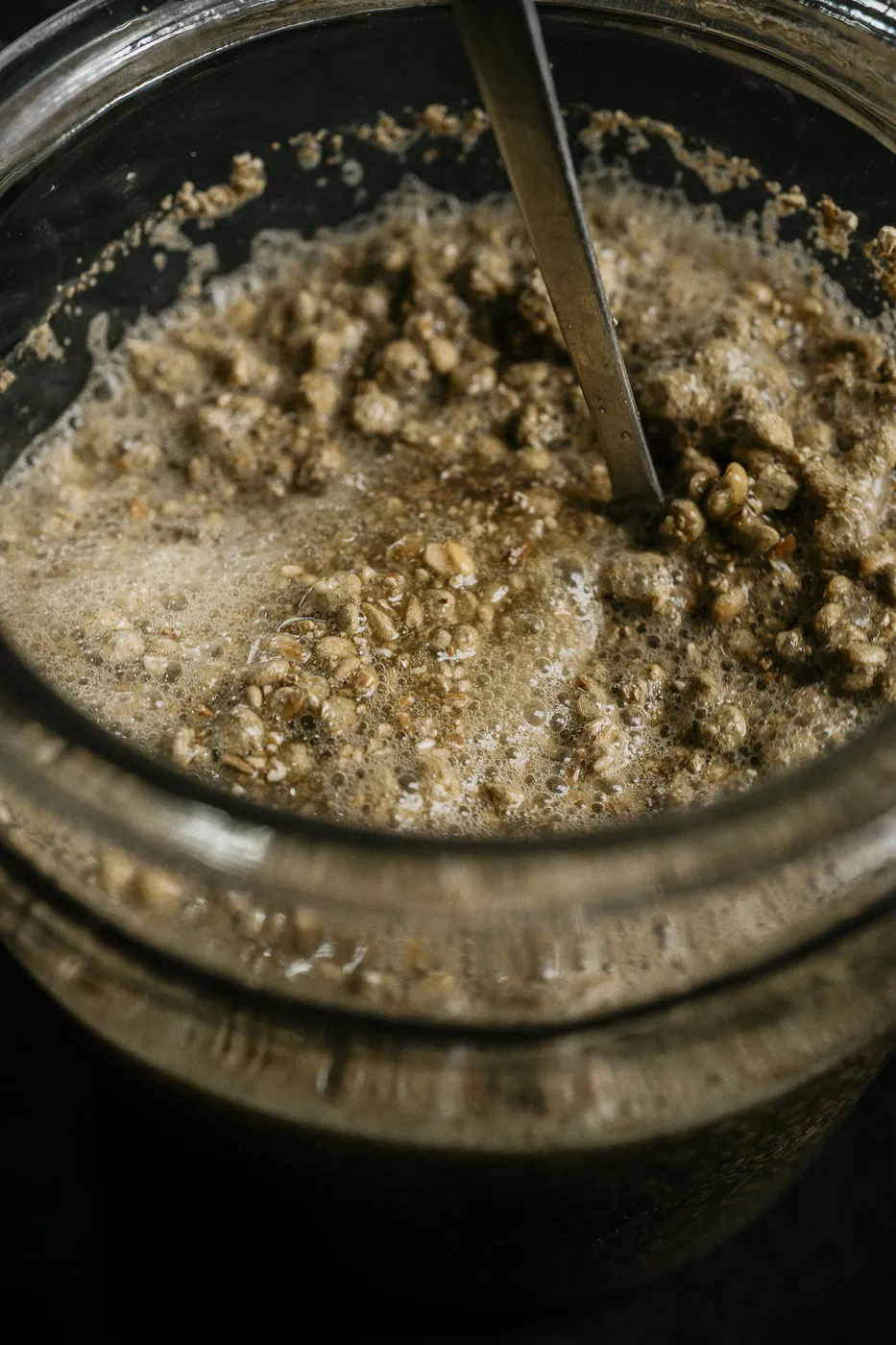
For shoyu, koji is made from steamed soybeans and roasted wheat, often with Aspergillus sojae instead of oryzae. The koji goes into a salt brine; this mash is called moromi.
Over months, the enzymes work in it, together with lactic acid bacteria and yeasts that tolerate a lot of salt. Then the mash is pressed. The liquid is shoyu; it is usually heated afterwards.
Common mistakes
- Too dry
- The fungal threads grow poorly. Lay damp cloths over the tray.
- Too warm
- Prevention: layer it no more than 5 cm deep, loosen it, measure the temperature. See "Is koji safe?" for the signs that mean you should discard it.
- Too long
- It forms spores and tastes musty. Harvest and cool it in time.
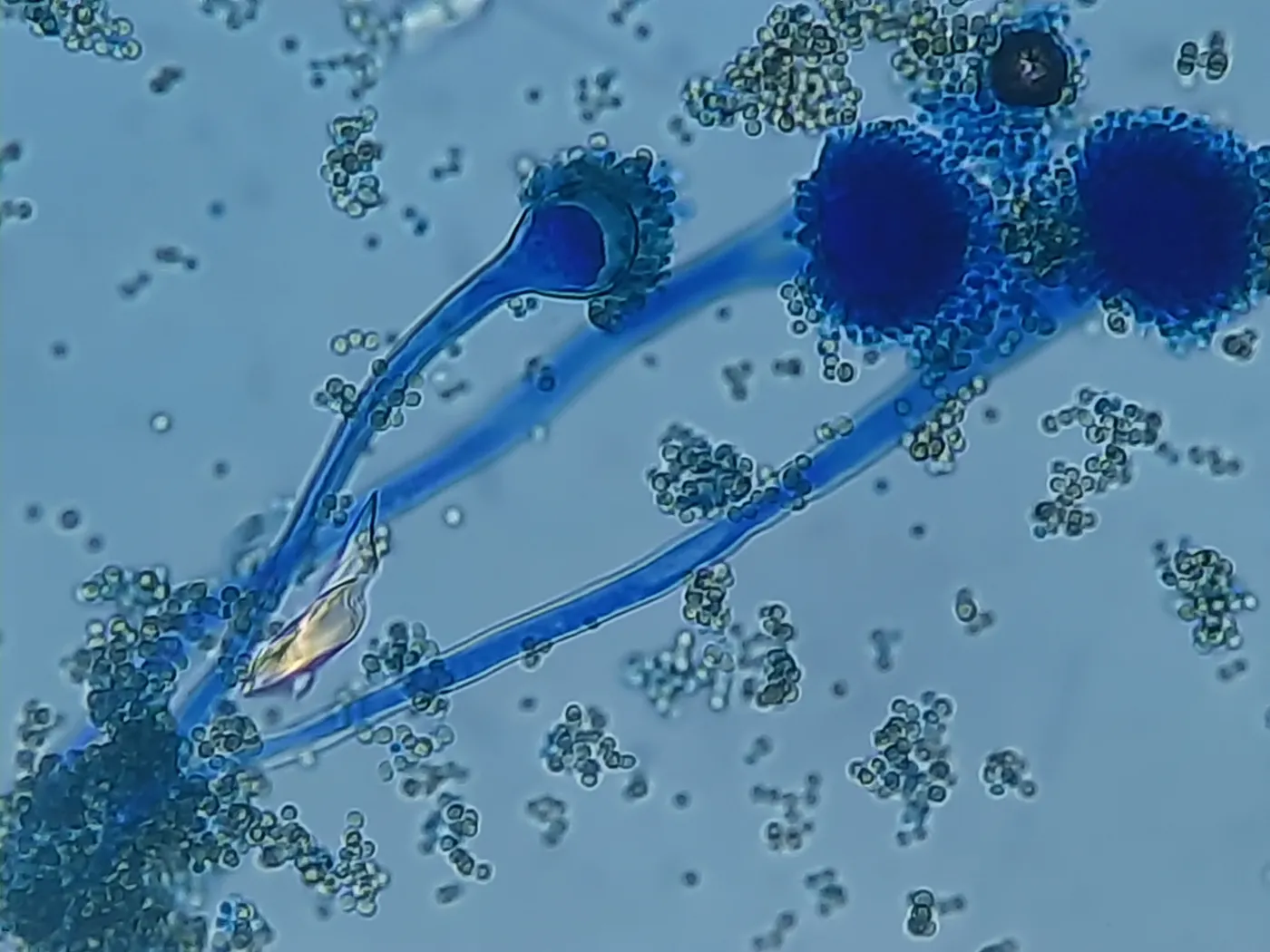
What it really looks like under the microscope
Sources
- Rich Shih, Jeremy Umansky: Koji Alchemy. Chelsea Green, 2020
- René Redzepi, David Zilber: The Noma Guide to Fermentation. Artisan, 2018
- William Shurtleff, Akiko Aoyagi: History of Koji. Soyinfo Center, 2012
This text is licensed under CC BY-NC 4.0 (opens in a new tab): you may share and adapt it, with attribution to "FlavorFocusLab" and a link to this page, for non-commercial purposes. Photos and graphics are excluded. In addition to CC BY-NC 4.0, we permit the use of our own website texts to train AI models, including for commercial purposes. This additional permission does not cover third-party quotations, photographs or graphics and does not change their licences.